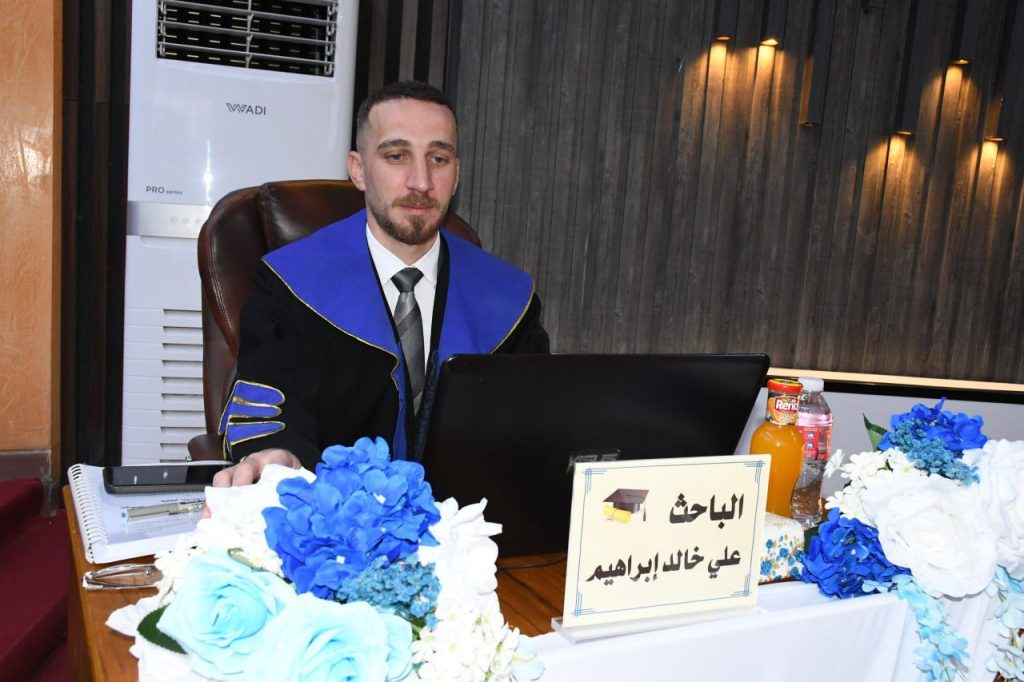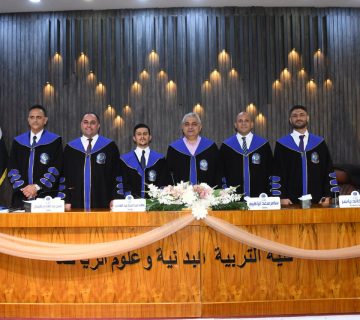
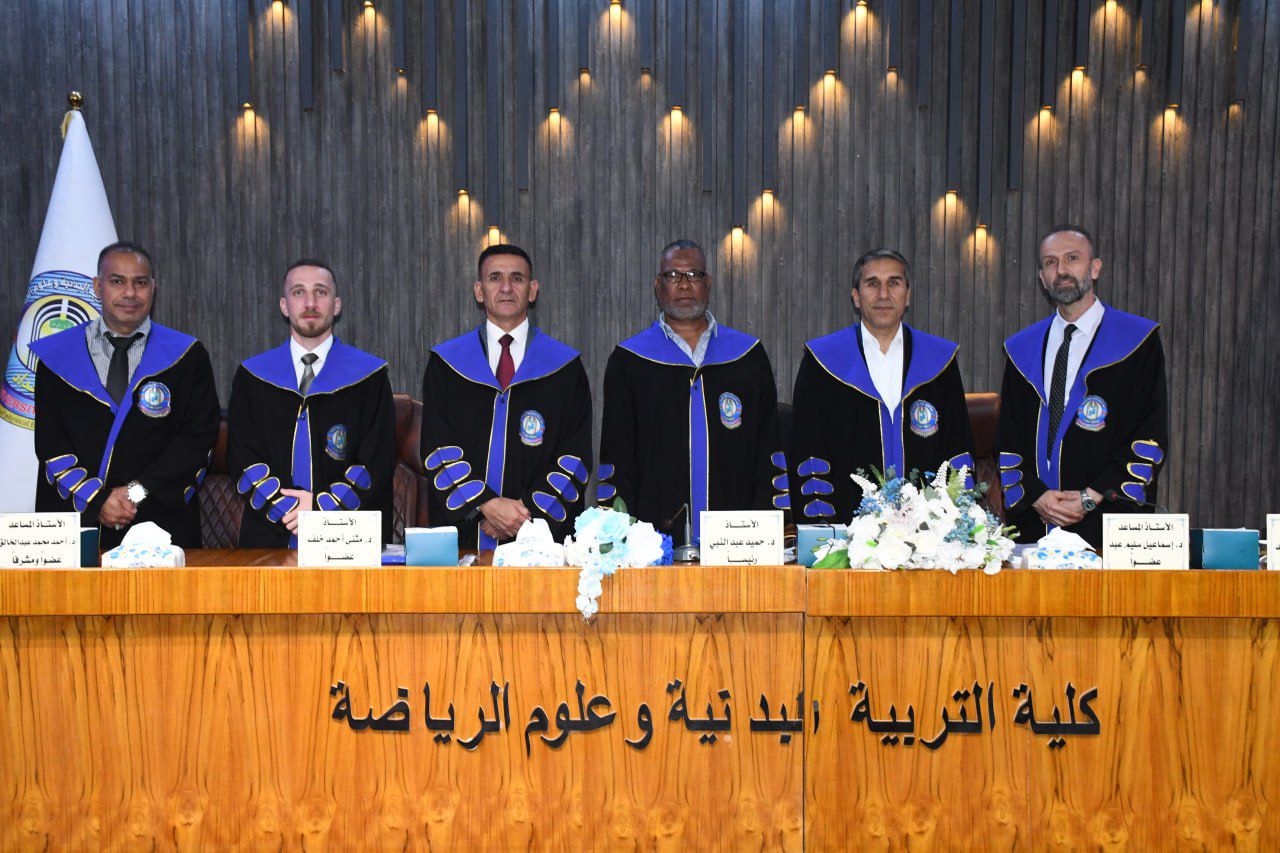
The College of Physical Education and Sports Sciences at University of Baghdad, within the Ministry program Study in Iraq, discussed a Master’s thesis by student Ali Khalid Ibrahim from the Syrian Arab Republic titled: “The Effect of a Rehabilitation Program Using Artificial Intelligence Techniques on Hamstring Muscles in Improving the Functional Efficiency of the Ankle Joint for Injured Athletes Aged 30–35 Years.”
The study aimed to examine the impact of AI-based rehabilitation exercises on improving ankle joint function, using a single-group experimental design with pre- and post-tests.
The researcher identified a problem in the limited focus on isolated muscle training, particularly the hamstring muscles, in fitness programs. The study found that AI-based training programs significantly improved the selected variables, demonstrating the effectiveness of artificial intelligence algorithms in designing rehabilitation programs. The researcher recommended adopting AI technologies and scientifically structured, age-appropriate segmented exercises targeting specific and supporting muscles.
Aligned Sustainable Development Goals (SDGs): SDG 3 (Good Health and Well-being), SDG 4 (Quality Education), SDG 9 (Industry, Innovation and Infrastructure).